After a day in the medina: what actually helps in the evening
A day in the medina is not a stroll: it is walking on irregular ground, with long stretches standing still and few places to sit. The tiredness that follows is very localised, and it responds well once you know where to look.
The short version
- Uneven ground works the ankle stabilisers, which pavement walking rarely touches.
- Standing still often tires you more than the walking itself.
- The priority areas: arch of the foot, calves, lower back.
- Twenty minutes with your legs raised before a treatment doubles its effect.
What the medina does to your body
The medina's lanes are cobbled, often irregular, sometimes sloping, and rarely flat for more than a few metres. With every step the ankle makes a small correction. Those micro-adjustments recruit stabilising muscles that pavement walking barely activates, which is why the ache the next day feels unfamiliar.
Then there is standing. People underestimate how long they spend motionless: in front of a stall, waiting for the group, watching a craftsman work. Standing still tires you more than walking, because blood pools in the legs instead of being pushed back up by the calves contracting.
Finally the bag. Carried all day on the same shoulder, it tilts your posture and builds asymmetric tension through the upper back and neck. That is usually what explains one-sided pain by the end of a stay.
Where it hurts, and why
| Area | Cause | What helps |
|---|---|---|
| Arch of the foot | Cobbles, thin soles, heat | Hands-on work, rolling on a ball |
| Calves | Constant stabilising, standing still | Elevation, gentle stretching, massage |
| Lower back | Hard ground, standing, bag | Warmth, slow mobilisation, medium pressure |
| Shoulders and neck | One-sided bag, head down | Targeted work, swap shoulders tomorrow |
| Swollen ankles | Heat and venous pooling | Legs raised, cool water on the calves |
The routine on getting in, in four steps
- Shoes off, and drinkThe order barely matters, but do both before sitting in a chair you will not leave.
- Twenty minutes with legs upLying down, feet against the wall or on cushions. The part everyone skips, and the one that changes the heavy-leg feeling most.
- Warm shower, cool finishEnd with cool water on the calves, working upward. Dry off completely before a treatment.
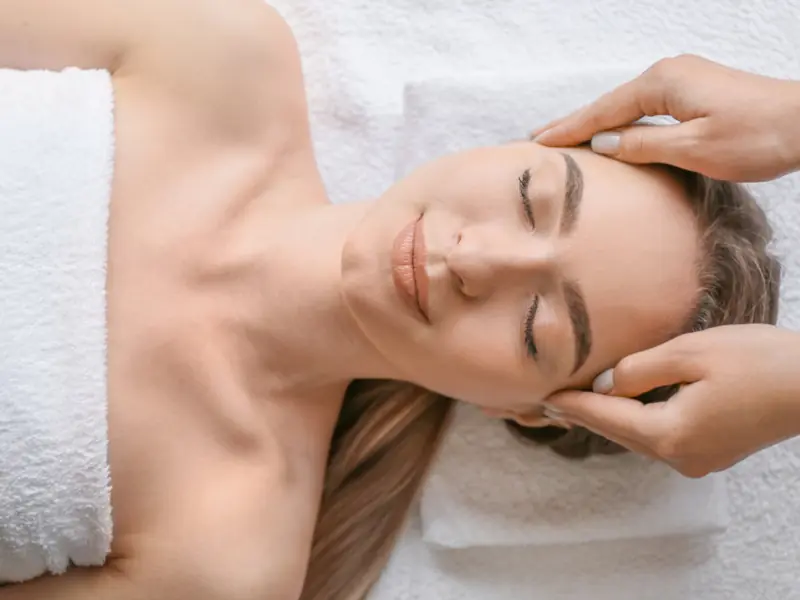
- Targeted treatmentSixty minutes is plenty. Explicitly ask for more time on feet, calves and lower back.
If you are going out for dinner, put the treatment before rather than after: you get the evening back instead of enduring it. If you are staying in, a 9pm slot works well and you go straight to bed afterwards.
What pressure to ask for
After a day of walking, the temptation is to ask for something very deep. It is rarely the right call: the muscles are already worked and tender, and too much pressure leaves soreness that spoils the next day.
Medium, sustained pressure, with firmer work only on the specific points that are tight, gives a much better result. Just tell the therapist where you walked and for how long: that is enough for them to adapt.
Worth saying at the start
- How many hours of walking, and on what kind of ground
- Which shoulder carried the bag
- Whether an area is painful rather than simply stiff
- Whether you are going out afterwards or going to bed
Frequently asked questions
Same day or the next day?
Same day if you can. Recovery works better before a night's sleep, and you sleep better for it. The next day is still useful, especially if another walking day is planned.
Does a hot bath replace a massage?
It relaxes, but it does not do the same job. A bath acts on the overall feeling; massage addresses specific areas, notably the arch of the foot and the calves, which hot water alone does not release.
How long should I book?
Sixty minutes suits the large majority of cases. Ninety is worth it if you want time on the upper back as well as the legs, or if you are stringing together several dense days.
Can the treatment happen in a medina riad?
Yes, it is the most common case. The last stretch of access is on foot, which is normal: give the riad name rather than the street, and we agree a meeting point if needed.